Our Blog

No Wooden Teeth, Please! Why Oral Health is So Important

August 2nd, 2023

Your teeth are precious. Once your permanent teeth come in, they need to last you a lifetime. Extensive tooth decay can lead to dental caries and the need for fillings, crowns, bridges, and dentures.

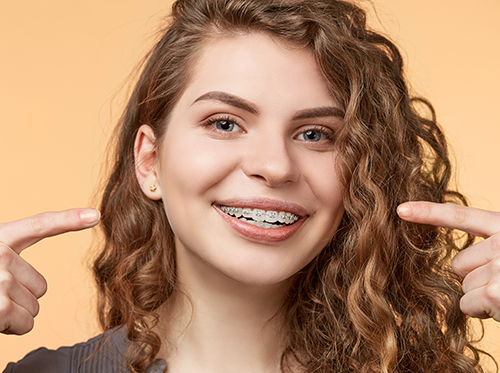
While these fixes can go a long way toward maintaining your quality of life, they cannot compare to your natural teeth. Getting braces is no excuse to let up on your thorough oral health routine: You need to take good care of your teeth before, during, and after braces to benefit completely from the gains you get from newly straightened teeth.

Why You Should Maintain Good Oral Health for Life

Begin a complete oral health regimen as early as possible in life, and maintain this routine throughout your life. Keeping your (or your child’s baby) teeth clean establishes a routine. It preserves healthy baby teeth whose function is to save space for the permanent teeth when they are ready to come in. Care of your permanent teeth helps preserve the enamel and prevent decay.

Take Special Care with Braces

It is important to pay attention to oral health when you have braces. If you do not take special care of your teeth during the months or years that you have braces, you risk irreversible damage to your teeth. Care is more difficult with braces because food can easily get stuck. In addition to brushing twice daily and flossing each day, Dr. Cronin and our staff suggest avoiding sticky foods.

Invisalign Teen® Treatment Benefits

July 26th, 2023

Many teens want straighter teeth but dread a mouth full of metal. Because of that, Invisalign Teen treatment has become a popular choice among teens. It produces great results without the hassle of traditional braces.

If you’re like most teens at our Langley office, you love hanging out with your friends, and you don’t want to look different or have to watch what you eat. If you’re unsure about the benefits of Invisalign Teen clear aligners, we’re here to explain some of the perks.

You can eat what your friends eat

Invisalign Teen aligners can be removed easily for meals and snacks, so you can eat just like you normally would. You don’t need to worry about food getting stuck in your braces or a bracket popping off. Unlike with braces, you can enjoy the following foods with your friends during Invisalign Teen straightening treatment:

  • Popcorn at the movies
  • Trail mix with dried fruit ribs and chicken wings
  • A peanut butter sandwich, apples, and carrot sticks

You can take care of your teeth more easily

Since Invisalign Teen aligners are removable, you won’t have to worry about finding tooth decay once your braces are removed. You can brush and floss your teeth as you normally would, just by taking the trays out of your mouth.

People won’t know you’re wearing them

We’ve saved the best for last: Invisalign Teen aligners are nearly invisible. Chances are, the only people who will know you’re getting your teeth straightened are the people you tell yourself!

Getting straighter teeth can be a massive confidence-booster in the long run. With Invisalign Teen clear aligners, the treatment isn’t that bad! Learn more at our Langley office.

Should I Get Braces?

July 26th, 2023

If you’re thinking about investing in braces, there are a few things you should take into consideration. It’s normal for adult teeth to come in crooked, which is why braces are a common solution for teens and adults who desire a beautiful smile.

Your dentist may recommend orthodontic treatment if crooked teeth begin to affect your or your child’s oral health. But many factors go into whether braces would be right for you or your child, or not.

Modern orthodontic treatments offer numerous options for the typical issues people face, such as crooked teeth or jaw alignment problems. Malocclusion, otherwise known as having a bad bite, is common in patients with crooked teeth.

Braces can be worn for a short period of time to correct uneven jaw alignment, which may be the cause of an underbite or overbite in patients. A retainer is worn afterward to keep the newly straightened teeth in place.

Now that one in five braces wearers is an adult, grownups have a variety of braces options. Braces are typically left on for at least one year to straighten teeth effectively. Options can include regular metal braces, clear braces, or Invisalign® aligners.

If you’re an adult and would prefer a discreet treatment, clear braces or Invisalign retainers are your best options. Dr. Cronin will be able to provide you with a recommended best route of treatment depending on what you’re trying to accomplish and what your budget is. Before getting braces, it’s worth learning about all the methods of treatment available at Cronin Orthodontics.

Be sure to contact your insurance company before your appointment to see if orthodontic treatments are covered; otherwise, you may want to plan to pay for out-of-pocket costs. If you have questions regarding the types of treatment we provide for our patients, call our Langley office for more information.


Digital X-rays

July 19th, 2023

Modern orthodontic technology has changed the way you wear braces. Brackets are smaller and come in a variety of shapes and colors. Wires are more efficient. Clear aligners can eliminate the need for brackets and wires altogether. And your high-tech advantages don’t stop there—today’s digital X-rays make creating your treatment plan even more convenient and efficient.

Why Are X-rays Necessary?

Beautifully aligned teeth and a healthy bite are the visible result of your orthodontic work, but there’s a lot going on above and below the surface that needs to be discovered and taken into account before your treatment even begins. X-rays help Dr. Cronin evaluate:

  • The size, shape, and position of your teeth, including impacted teeth and wisdom teeth
  • The size, position, and health of your roots throughout treatment
  • The size and shape of your jaw bones, and how they affect your teeth alignment and bite
  • Your progress during different phases of treatment
  • The most effective type of retainer for protecting your beautiful smile after treatment.

How Do X-rays Work?

Traditional X-rays, or radiographs, make use of film just like traditional cameras. When you have an intraoral X-ray, for example, the film is sealed in a moisture- and light-proof packet, and placed inside the mouth to capture images of specific teeth and the bone around them.

The X-ray machine is aligned precisely with the film and an exposure is taken. The image at this point is latent, and won’t show on the film, because, just like photo film, traditional radiographs need to be chemically processed before they produce a visible image.

Digital technology, on the other hand, uses an electronic sensor instead of film. For an intraoral digital X-ray, a small sensor is positioned in the mouth just like a film. When the X-ray is taken, a digital image capture device produces an image which is formed by a matrix of pixels instead of a photo-like film exposure. This format allows the image to be sent directly to a computer for immediate display without requiring processing.

Even though these methods seem very similar, digital X-rays offer some significant advantages over traditional films. Let’s look at how they compare, more or less.

  • More Diagnostic Advantages

A traditional X-ray is a fixed image. It cannot be modified or enhanced. Here the digital X-ray offers a clear advantage in evaluating your teeth and the bone structure surrounding them.

Just as you can enlarge certain types of images on your computer without blurring or losing detail, a digital X-ray uses computer software to magnify images while keeping their details sharp. They can also be enhanced through brightness and contrast applications to make details stand out even more.

There is even digital subtraction radiography software available that can be used to compare recent images to older ones, removing (“subtracting”) all the similarities in the two images to display only the changes in the two—even small changes—that have taken place over time.

  • Less Exposure to Radiation

Modern technology means traditional X-rays expose patients to less radiation than ever before, but digital X-rays have significant advantages here as well. Radiation exposure can be reduced by an additional 10%, 20%, or more with a digital radiograph.

And while all types of dental X-rays expose you to very little radiation, it’s always best to reduce exposure whenever possible.

  • More Convenient for Sharing and Transmitting

If you need to share your X-rays with another dentist or physician, digital technology allows you to simply have them e-mailed to another office or multiple offices. You no longer need to worry about preserving physical copies, either.

  • Less Waste

Unlike traditional X-rays, digital X-rays don’t need to be processed, so you save time in the office. And while the processing time is not significant (usually several minutes), if you need to repeat some X-rays for a clearer picture, or require different images for several teeth, this time can add up.

Digital X-rays are also more eco-friendly.  The fact that they don’t need to be developed means that the chemicals used to process traditional films are no longer necessary—which also means that there is no need to dispose of chemical waste products afterward.

Our goal is to provide you with the safest, most efficient, and most effective treatment possible. Digital X-rays are an important tool for orthodontists, helping us to provide you with the best treatment plan possible. If you have any questions about digital X-ray technology, contact our Langley office. We’re happy to explain the science—and the benefits—behind this high-tech diagnostic tool.