December 7th, 2023
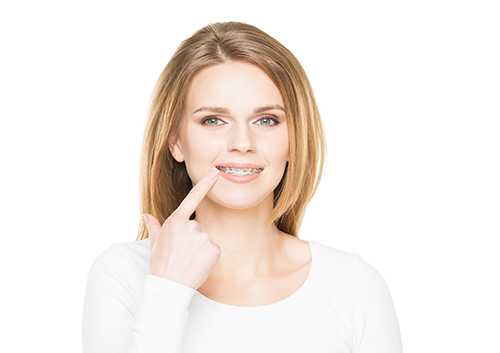
If this is your first winter with braces, you might be wondering how to make the best of the holiday season. Dr. Cronin and our team have some suggestions for happy and healthy holiday smiles.
Treat Yourself
Winter means tasty holiday treats, and just because you wear braces doesn’t mean you need to step away from the holiday table! You can enjoy your favorites if you remember to check your list for the usual problem foods. Hard, crunchy, chewy, and sticky items? Naughty list.
- Crunchy vegetables on the appetizer plate
- Nuts
- Hard rolls
- Candy canes and other hard sugar treats
- Caramels, Toffee and other sticky candies
- Pecan pie
- Fruit cake
Luckily, there are plenty of nice alternatives.
- Turkey and ham—remember, small pieces are best
- Dressing and stuffing
- Mashed potatoes
- Soft breads and rolls
- Pumpkin pie—but skip a tough crust!
- Cheesecake
- Soft cookies and cakes
- Soft chocolates
We’re happy to provide recommendations for braces-friendly holiday foods. And we don’t expect you to turn down every sweet treat this season. Just be sure that if you enjoy something sugary, brush carefully after indulging.
Express Yourself
While you’re decking the halls, or pinning up the New Year’s balloons and streamers, or even choosing a great holiday outfit, don't forget that your ligatures can be decorative as well as functional.
- Celebrating Christmas? Red and green bands around your brackets are jolly and traditional.
- How about Hanukkah? Try blue and white!
- Love the season? Icy silvers and pale blues are a frosty statement—and can have the benefit of making your teeth look whiter, as well. Snowy white? The arctic idea is great, but white bands can sometimes make teeth look more yellow, or become stained themselves.
- Glam New Year? Gold adds sparkle to your smile, but can bring out any yellow tones in your teeth. Silver might be the perfect choice, because it is generally neutral with enamel shades.
Check out our ligature colors for the best possible choices for your teeth and coloring. Take advantage of these options to create a fresh, confident look for the season. Give others the gift of your smile!
Look After Yourself
Winter comes with some special reminders about your dental health.
- Winter sports are a great way to celebrate the snow and ice, but be sure to protect your teeth and braces. If you enjoy skiing, snowboarding, ice skating, hockey, or any other winter activities, talk to us about why a mouth guard is so important.
- While you enjoy your winter break, don’t forget to keep up with your dental routine. And because ‘tis the season for holiday treats, be especially careful to clean your teeth and braces after sweet desserts and snacks. Don’t forget to floss!
- What do cold breezes and hot chocolate have in common? They can both trigger tooth sensitivity! While some sensitivity is normal after an adjustment, if you find you are experiencing tooth sensitivity more often or more strongly than you usually do, give us a call. It might be something as simple as brushing habits, or you might need to see your dentist.
If you have any questions about your braces, in this season or any other, just ask when you visit our Langley office. Your beautiful, healthy, and confident smile can make this the most wonderful time of the year!
November 29th, 2023

Sometimes real life is stranger and more interesting that any made-up story. These weird and interesting facts about braces will amuse you … and make you glad you didn’t have to get braces “way back when.”
Mummies with braces: Archaeologists have discovered mummies with crude bands of metal wrapped around their teeth. The metal was wrapped around each individual tooth, and it is believed that ancient dentists used catgut to guide the teeth and close the gaps.
First “official” braces: The first official braces were constructed in 1728 by Pierre Fauchard. They consisted of flat strips of metal. String was used to connect the metal to the teeth.
Early rubber bands: In 1850, Tucker began making rubber bands out of rubber tubing.
Brackets are better: Brackets were invented by Edward Angle in 1915. They were not bonded to the teeth directly, but instead were attached to bands that went around the teeth.
Wiring by NASA: As braces have become more modern, the technology has improved by leaps and bounds. You may know that some braces wire contains nickel titanium. What you may not know is that this metal was developed by NASA and has special shape memory that is activated by pressure or body heat.
Over 60 with braces: Actress Faye Dunaway got braces at the age of 61, which shows you are never too old to look more fabulous!
Oh, and one more thing that didn’t quite make our list, but is interesting all the same. Did you know that almost 25 percent of patients who get braces have to get them again because they wouldn’t wear their retainers? So suck it up, buttercup, and use that retainer!
November 29th, 2023

Now that you’ve graduated from your braces or aligners, you might think you’re finished with orthodontic cleaning tips. Not quite yet! Your retainer needs love, too—not just because it can look or smell “less than appealing” without your help, but because it’s good for your dental health.
Removable Retainers
If you have a Hawley retainer or a clear retainer, cleaning it whenever you remove it is a great idea. Unappetizing white patches mean plaque or mineral deposits from your saliva have dried and hardened on your retainer’s surface. And if you notice an unpleasant taste or odor, it probably means that germs and bacteria have made themselves at home and are growing in and on your appliance.
You don’t want old plaque or new bacteria in your mouth! Here are some ways to keep your retainer clean and fresh:
- After wearing it, you can clean your retainer with a toothbrush, but don’t brush too vigorously. You might scratch it. Use a soft or even extra-soft brush to clean out all the nooks and crannies, and then rinse.
- Use cleaning products which have been recommended by Dr. Cronin if your retainer needs a deeper clean. Denture cleaners, retainer cleaners, and even toothpastes can be too abrasive or cause discoloration, so use the products made for your specific retainer.
- Let your retainer dry before storing it in a dry place after cleaning. Shutting a damp retainer into a closed case provides bacteria with the damp, dark environment they thrive in. (PS—clean your case regularly, too!)
- One of the benefits of a clear retainer is that it’s almost invisible. And you can help keep it that way by removing it whenever you eat or drink. Your retainer can become stained from colored foods or liquids.
Fixed Retainers
A permanent retainer is a small piece of wire that is custom-fit and bonded to the inside of selected teeth to keep them from shifting. Because food particles and plaque can accumulate around a fixed retainer, brushing after meals and at least twice a day is recommended. Bacteria and plaque cause bad breath, cavities, and tartar buildup, and removing tartar might require removing your retainer.
While a fixed retainer can be tricky to clean, there are techniques and products that make cleaning easier and more effective:
- An orthodontic toothbrush with a smaller head might reach behind your teeth more comfortably.
- Don’t forget to floss! Using a floss threader will help you get that wriggly floss behind the retainer and between your teeth.
- Try a water flosser. These handy devices direct a stream of water right into hard-to-reach places for more thorough cleaning.
If you’re having trouble keeping your retainer clean, our Langley orthodontic team can teach you all you need to know about tools and techniques to keep your retainer—and your teeth and gums—healthy. An attractive smile is a great thing. A healthy, attractive smile is even better!
November 22nd, 2023

Temporomandibular joint disorders (TMD) describe a set of conditions that involve trouble with your jaw and face muscles. They result from a problem in the temporomandibular joint (TMJ), which is a hinge that connects the temporal bones, in your skull in front of each ear, to your jaw. The joint enables you to talk, yawn, and chew by letting your mouth move.
TMD can be very painful and interfere with functions such as eating and speaking. This what to watch for and how to try to prevent TMD.
Risk Factors for TMD
You are at higher risk for TMD if you are a women than if you are male. The disorder is most common among adults between the ages of 20 and 40 years. Other risk factors for TMJ disorders include the following.
- Arthritis in the area, making movement more difficult
- Excessive tooth grinding, because it increases stress on the joint
- General stress, which can lead you to clench your teeth and strain facial muscles
Symptoms of TMD
Symptoms of TMD can last for just a short while, or for several years. Seeing Dr. Cronin is important if your symptoms make it impossible for you to eat regularly or if you have unbearable pain or discomfort. The following symptoms can occur on both or one side of your face.
- Aching or very tired facial muscles
- Jaws that are fixed open or shut without you being able to unlock them
- Grating or popping sounds when you chew or close or open your mouth
- Pain in the entire area, including the mouth, jaw, neck, or shoulders, that comes on when you chew or yawn
Preventing TMD
You can try to prevent TMD by focusing on reducing risk factors. If you grind your teeth at night, ask Dr. Cronin about wearing a mouthguard. If you are overly stressed, look into ways to better manage your stress and relax your muscles. Another strategy for trying to prevent the development of TMD is to avoid chewing gum, since that puts stress on your jaw.
If you have questions about TMD, don’t hesitate to contact our Langley office.