
Our Blog

What Your Braces Rubber Band Color Says About You

July 25th, 2018
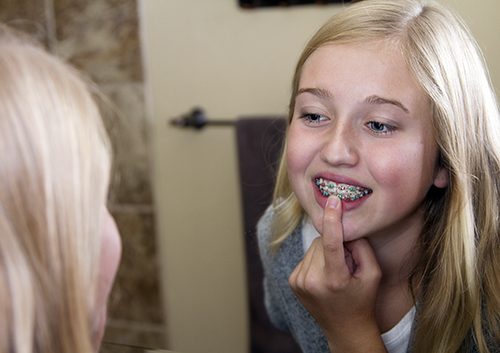
However you may feel about having to wear braces, choosing the color of your rubber bands is sure to bring a smile to your face. Whether you want to express your creativity, coordinate your braces with your outfits, or show some serious school spirit, decorating your mouth with colorful bands takes some of the stress and self-consciousness out of wearing braces. So what do your rubber band colors say about you? Look no further than our rubber band horoscope.

Red. You’re intense and forward thinking, and that you won’t back down no matter how big the challenge. Red is also the color of the heart, so red rubber bands indicate that you’re a caring, loving person.

Blue. Blue means you’re chill – as cool as a cucumber. You’re one cool customer, as the saying goes. You’re relaxed and calm, even when your mom says you can’t chew any gum or eat popcorn because of your braces.

Green. Look at a traffic light and green means go, right? So you’re the type of person who’s always on the move. Go, go, go! It also means you’re generous and kind. Green is the color of nature and spring, so it says you love Mother Earth. Perhaps you even recycle. Green is the color of good luck.

Orange. You’re daring and wild, flamboyant and fun. Orange may indicate you’re an artist or a drama student. It says you have a big personality and that you don’t care what other people think about you. However, orange is also the color of balance and energy. And being flamboyant and fun takes a lot of energy!

Purple. You’re the creative type, for sure. You beat to a different drummer and think outside the box. It says you're mysterious. Purple is the color of royalty, and when you wear your purple rubber bands you are royally cool.

Color Combinations

What if you can’t choose just one color? Well, you can decorate your teeth with alternating colors. You can choose the colors of your favorite sports team or holiday colors like red and green. If you’re still stumped as to what colors to choose, ask Dr. Grant or a member of our team. We can let you in on all the trends our other patents are sporting at our Douglasville or Union City office!

Importance of Oral Hygiene with Braces

July 25th, 2018

15.00

Normal
0

false
false
false

EN-US
JA
X-NONE

/* Style Definitions */
table.MsoNormalTable
{mso-style-name:"Table Normal";
mso-tstyle-rowband-size:0;
mso-tstyle-colband-size:0;
mso-style-noshow:yes;
mso-style-priority:99;
mso-style-parent:"";
mso-padding-alt:0in 5.4pt 0in 5.4pt;
mso-para-margin:0in;
mso-para-margin-bottom:.0001pt;
mso-pagination:widow-orphan;
font-size:12.0pt;
font-family:"Cambria",serif;
mso-ascii-font-family:Cambria;
mso-ascii-theme-font:minor-latin;
mso-hansi-font-family:Cambria;
mso-hansi-theme-font:minor-latin;}

Proper oral hygiene techniques are always worthwhile, but they are especially crucial when you’re wearing orthodontic appliances such as braces. When you don’t maintain an effective oral hygiene routine, you can be more susceptible to gum disease as well as tooth decay, cavities, decalcification, discoloration, and/or staining of the teeth.

Braces themselves don’t cause these issues, but since they create spaces that are difficult to clean, they provide extra sources of food (dental plaque and food debris) for the bacteria that do. Bacteria create a biofilm on the surface of a tooth that can spread if not addressed. That bacteria food can only be removed by a mechanical action: brushing and flossing your teeth!

Here’s a list of smart hygiene steps to follow for the duration of your braces treatment:

Proper tooth brushing technique: Make sure to brush your teeth thoroughly (for a total of about two minutes), but not too hard. Point the head of the toothbrush at the gum line and brush just hard enough so that you feel slight pressure against the gums. Use a soft, small-headed toothbrush or an electric toothbrush if you’d like. Try your best always to clean on and around every tooth, bracket, and wire in your mouth!

Flossing: Braces can make flossing a chore, but it’s an essential adjunct to proper tooth brushing. Make sure to floss between all your teeth and brackets. Dr. Cronin can provide you with braces floss threaders and interproximal toothbrushes (small brushes used to clean areas under wires and between brackets) to make the task easier. You might also consider purchasing an oral irrigator that uses a stream of water to blast food particles and debris from between teeth and gums.

Rinse with water: This may sound slight, but it’s a good idea, especially if you aren’t able to brush. Rinsing your mouth with water throughout the day helps to dislodge the decay-causing food particles that become lodged in braces.

Hygiene away from home: It’s a good idea to have a kit with a toothbrush, floss, floss threaders, mirror, and small water cup on hand at school or work. That way, you’ll be sure to have all the tools you need to keep your mouth clean.

Regular professional cleanings: As always, it’s best to visit your dentist regularly to verify everything in your mouth is in order and your oral hygiene routine is effective. Twice a year is sufficient, unless the dentist recommends more frequent visits.

It's vital to keep your teeth and gums clean during your braces treatment, and that requires your care and attention. If feel like you need help with any of the techniques above, a member of our Langley team can demonstrate them for you!

When should I floss during the day?

July 18th, 2018

A vital step in your oral health routine is flossing. We hope our patients at Grant Orthodontics maintain good oral hygiene, including daily flossing between each visit to our Douglasville or Union City office. A toothbrush is not always enough to get to the hard-to-reach areas of your mouth. When food remains between your teeth, bacteria starts to grow and will break down your enamel. This is where flossing comes in!

Should you floss before or after brushing?

Whatever your personal preference, you may floss before or after you brush your teeth. When you floss first, you can brush away any leftover dislodged food debris from your teeth. On the other hand, when you brush first, you will loosen the plaque between your teeth, which makes flossing more effective.

The essential aspect is that you floss thoroughly by using a fresh strand of floss and make sure to get between every tooth. Even if your teeth look and feel clean, don’t skip flossing or plaque will begin to build up on your teeth.

When is the best time to floss?

Although you should brush your teeth at least twice a day, Dr. Grant and our team recommend flossing your teeth thoroughly once a day. Many people prefer to floss before bed, so that plaque doesn’t sit between their teeth all night.

What kind of floss should I use?

You may choose between interdental cleaning picks or flexible floss strands to perform your daily flossing routine. If you have permanent oral appliances or restorations, be sure to follow the flossing instructions provided to you.

Do you need help flossing?

If you’re having trouble flossing or have questions about which floss is best for your teeth, contact our Douglasville or Union City office and we can provide you with support. Be sure to keep up with your daily flossing routine, and we will see you at your next appointment!

What's the best dental floss?

July 18th, 2018

Dental floss is similar to a lot of products that depend mainly on the consumer’s preference. Fact is, floss comes in a wide variety of flavors, coatings, and other variations, but all types of floss essentially do the same thing. After all, that is what is most important: that the dental floss you buy is functional—cleaning the areas in between your teeth. If you want to know what the best dental floss is, the answer is the kind that enables you to successfully and regularly clean those areas. So to help you find the right type of floss for you, here are some options.

Flavored Dental Floss

Many people that floss prefer a flavored dental floss because it freshens their breath even more than unscented floss. The latter can also take on the smells associated with bacteria in your mouth. And we all know how bad that can be. So, if flavored dental floss is what you prefer, and it allows you to floss your teeth regularly, then it is automatically best for your mouth.

Flossers

There are also products on the market called flossers, which usually consist of a plastic instrument with strung floss and a pick on the opposite end. This option can be both effective at cleaning the areas in between your teeth and scraping off plaque. These flossers also come flavored in mint and various other varieties.

Gentle Dental Floss

Some people find that typical dental floss is too harsh on their gums. For that reason some companies make floss with soft coatings that are less abrasive on the gums. For the most part these types of floss are just as effective as regular floss, and for those people that require a more sensitive approach to flossing, especially when just starting out, this is the best option.

Of the aforementioned options, it is difficult to name an absolute best type of floss. However, Dr. Cronin and our team say that the type of floss that works best for you, giving you the greatest chance of succeeding at regular flossing, is the best. For more information on floss, contact our Langley office.