August 8th, 2018

If you’ve visited Grant Orthodontics, then there’s a good chance you’re looking to perfect your smile by straightening your teeth with braces. At some point during your treatment, you may need to use elastics, otherwise known as rubber bands, for a certain period. These are used to apply additional pressure that will move your teeth in the right direction.
Placement of the elastics is specific to each patient’s teeth. These small rubber bands stretch over the tiny loops on both the top and bottom brackets. At first, Dr. Grant may recommend you wear the elastics both day and night for an extended time.
You may be told to switch only to nighttime wear once the teeth are set in the correct position. By consistently wearing the elastics, you can shorten the overall time your braces will have to be on.
The elastics are made from medical-grade latex. If you have an allergy to latex, make sure to let Dr. Grant know, so you can be given an alternate material. We will show you how to take elastics on and off when they’re given to you at your appointment.
You should remove them when you eat so they don’t become overstretched or break. It’s important not to overstretch the bands, and always to replace them if they break. Eventually it will become a familiar habit to carry the bands around with you for times when this might happen.
The Do’s and the Don’ts
- DO … always wash your hands before removing or replacing the rubber bands.
- DO … call us if you run out of elastics.
- DO … get in the habit of carrying around extra rubber bands as replacements.
- DON’T … double up on elastics because this can exert too much pressure on your teeth and could actually harm the roots.
- DON’T … overstretch the rubber bands or they will lose strength and become ineffective.
If you were recently given elastics as well as your braces, feel free to ask any questions during your appointment, or call our Douglasville or Union City office any time. Using elastics correctly is one more step in your journey to a perfect smile!
August 8th, 2018

If your teeth don't line up like they used to any more, you may be suffering from temporomandibular joint disorder, often called TMD. This is a term that can actually be applied to any condition that occurs because the temporomandibular joint (TMJ) is inflamed.
The temporomandibular joint is essentially the hinge that holds your lower jaw to your skull, and when it is inflamed or damaged in any way, it can be extremely painful. You have two temporomandibular joint, one on each side of your jaw, and it is typical to experience TMD in both sides at the same time.
Shifting of the Teeth
The reason that your teeth may not line up as they once did is that the ball and socket joints are often out of alignment and, as mentioned above, often very inflamed as a result. In order to correct the problem, Dr. Cronin may prescribe dental orthotics such as a lower jaw splint.
Sometimes, the wisdom teeth can play a role in the shifting of the teeth as well. If shifting wisdom teeth is combined with TMD, it may be necessary to have your wisdom teeth removed. Dental splints may follow if your teeth don't shift back to their proper positions on their own.
TMD is certainly a difficult thing to deal with, so if you experience your teeth shifting, scheduling an appointment at our Langley office is the smartest course. We want to help you get your smile back, so give us a call anytime.
August 1st, 2018

You’ve selected the Invisalign system because of the many benefits Invisalign offers: comfort, convenience, appearance, and even potentially shorter treatment time! And to add to the good news, caring for your Invisalign aligners is easy and uncomplicated. Follow these simple tips to keep your aligners in the best possible shape as you move through the stages of your treatment.
Stay Clean
- Always brush and floss your teeth before using your aligners so that bacteria and food particles will not have a chance to collect around your teeth while you wear them.
- When you brush your teeth, be sure to brush your aligners with a separate soft toothbrush and lukewarm water as well.
- Rinse your aligners whenever you remove them during the day.
- Soak your aligners as recommended. Use the Invisalign Cleaning System or ask our Douglasville or Union City team for other suggestions to keep your aligners free from odor and bacteria.
Stay Clear
One of the reasons you chose Invisalign is for an almost invisible appearance. Why take a chance on discoloration or scratches that will make the appliance more noticeable? Here are some common mistakes that can affect the color of your aligners:
- If your aligner has white spots, that might mean plaque build-up. Always rinse your aligner after you remove it and clean it thoroughly night and morning.
- Brushing with anything other than a soft brush and brushing too hard can cause scratches in the material which might be noticeable. A gentle touch will work to clean and protect your aligners.
- Eating with Invisalign aligners can cause staining. More important, it can cause the retention of food particles in the appliance, which can lead to dental problems. Finally, aligners are not meant for chewing—they might be damaged or lose their ideal shape even with soft foods. If you are going to be eating or drinking, take your aligners out, give them a rinse, and brush before you replace them. Or stick with water! Water will have no ill effects on teeth or aligners.
- Only soak aligners in an appropriate solution. Harsh chemicals, colored mouthwashes, and even some toothpastes can dim or discolor the clear plastic.
Talk to Dr. Grant about the best products to use and the best methods for taking care of your aligners. After all, making the process of improving your smile as easy and effective as possible is yet another benefit of choosing Invisalign!
August 1st, 2018
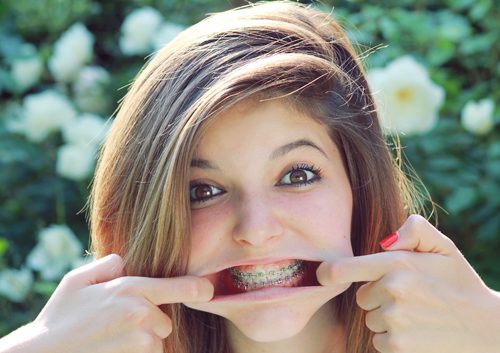
The goal of orthodontic treatment at Cronin Orthodontics, which may include the use of braces, retainers, and aligners, is to straighten your teeth. Treatment often starts in the pre-teen or teenage years, but adults may also need orthodontic treatment. The treatment can feel like a chore that lasts for several months or a couple of years, but it can fix important problems. These include:
- Crowded teeth spaced too close together
- Gaps between your teeth
- Crooked teeth
- Overbite or underbite
- Upper and lower teeth that do not meet
Straight Teeth are More Attractive
You are more likely to be proud of your smile when your teeth are straight and evenly spaced. Pride in your appearance can give you more confidence and encourage you to try new things. This can be particularly important for adolescents. In addition, people often judge others based on first impressions. A smile that shows straight teeth is more attractive.
Better Oral Health is Easier
Brushing and flossing your teeth are two basic components of an oral health routine to protect your teeth from conditions such as tooth decay, gingivitis, and plaque build-up. As Dr. Cronin and our staff know, caring for your mouth is easier when your teeth are straight. The Canadian Dental Association says the following conditions are less likely to occur if you have the proper orthodontic treatment.
- Dental caries
- Gum disease or gingivitis
- Tooth loss
- Impaired speech
- Worn tooth enamel
Orthodontic Treatment Improves Nutrition
Poorly aligned teeth can reduce your ability to chew properly or make certain foods more difficult to eat. Many of these more challenging foods are healthy, and avoiding them can cause you to limit your diet to softer, often less-nutritious foods, such as ice cream and canned soup. Straighter teeth and a better ability to chew let you eat crunchy foods, such as apples and carrots; stringy foods, such as asparagus and chicken; and chewy foods, such as raisins.