Our Blog

We proudly offer Invisalign Teen®!

November 9th, 2022

Dr. Cronin and our team are excited to offer Invisalign Teen, a clear alternative to braces that’s just for teens! With Invisalign Teen, we are able to straighten your teen’s teeth without the hassle, discomfort, and embarrassment of traditional braces.

Invisalign Teen’s clear aligners are virtually invisible. What's more, they are removable, which means your child is free to eat anything they choose, as well as brush and floss with ease! And best of all, Invisalign Teen uses no wires or metal to straighten your teen's teeth.

Invisalign Teen aligners are made from a lightweight plastic material and fit precisely on the teeth. Invisalign Teen has become a popular treatment here at Cronin Orthodontics because it helps our younger patients achieve a straight, beautiful smile without their friends noticing.

Our team at Cronin Orthodontics is aware that most teens today have a busy lifestyle, and sometimes, they tend to lose things, including their retainers or aligners. But with Invisalign Teen, if your child happens to lose an aligner, let Dr. Cronin and our team know as soon as possible and we will have the aligner replaced.

For more information on Invisalign Teen, please give us a call at our convenient Langley office today!

Are braces right for me?

November 2nd, 2022

According to Preferred Consumer, it's estimated that 50 percent of people around the world have teeth that are crooked, not aligned properly, or irregular. Fortunately today, orthodontics has advanced to the point where corrective devices, such as braces and retainers, are less obvious, more comfortable, and can be worn for shorter periods of time.

So, with that being said, how do you know if braces are right for you? Typically your dentist will be able to point out any issues with your teeth at your regular six-month cleanings and recommend you to an orthodontist. But here are some other things to keep in mind when deciding whether or not braces could be in your future:

Crooked Teeth

As children grow, so do their teeth. And more often than not, certain teeth will grow in crooked. This isn't uncommon, as the majority of children will require some sort of teeth correction, whether that’s braces or retainers. Retainers are custom-made devices that either work to hold teeth in place or correct tooth alignment. They're often worn all day, aside from meals, at the start of the treatment period and then eventually are rolled back so they're just worn at night. Braces on the other hand are worn for at least a year and work to help straighten or position teeth.

Overbite or Underbite

The other main oral issue that orthodontics helps correct is uneven alignment, such as an underbite or an overbite. You might hear Dr. Cronin refer to this as a "malocclusion," which means "bad bite." Braces can help rearrange your alignment so an overbite or underbite is less of a problem. Typically after the braces come off for this sort of treatment, patients need to wear a retainer from Cronin Orthodontics to finish the treatment.

While braces are typically associated with dental issues in children, more adults are wearing the devices as well. About one in every five braces wearers are adults; a sign that it's never too late to correct any oral issues. Part of this is due to the technological advancements in orthodontics. For instance, new braces feel much better and come in a variety of styles — including clear — so they're far less obvious. Plus, the wires on braces are now made from advanced metals, which are stronger and lighter, so they get the job done much more efficiently. With so many people wearing braces these days, nicknames like "metal mouth" and "brace face" are almost a thing of the past. What's more, is that insurance plans are increasingly covering orthodontic treatment, making braces a much more feasible option for families on a budget.

When weighing whether or not braces are in your future, it's important to study all of your options about the styles of braces and what treatment option is best for you. Also be sure to contact your insurance provider to see what is covered and what will have to be paid out of pocket. It might take a few years of treatment, but braces can give you that winning smile for the rest of your life. Call our Langley office with any questions you might have!

Start Your Day Off with a (Healthy) Smile!

November 2nd, 2022

If there’s one meal that can claim the title of “Sweetest Meal of the Day,” it’s almost certainly breakfast. Sugary cereals, syrup-covered waffles, oatmeal with honey, cinnamon toast (which is literally sugar poured on toast)—it’s hard to imagine another menu even coming close. But you’re trying to keep your diet as healthy as possible. What to do?

First, no need to deprive yourself of the occasional pastry or stack of pancakes. The real problem with breakfast isn’t so much sugar as it is added sugar.

  • Just a Spoonful of Sugar? What’s So Bad About That?

Nothing! Many healthy foods have natural sugars. Milk contains lactose sugar, and it also contains calcium and is enriched with vitamin D—both of which are essential for strong bones and teeth. Fruits get their sweetness from a sugar called fructose, and deliciously provide vitamins, minerals, antioxidants, and fiber to our diets.

Even processed sugar is surprisingly low in calories. In fact, a teaspoon of white sugar has only about 15 calories. But this teaspoon is also rich in nutrients for cavity-causing bacteria. The oral bacteria in plaque use sugars and carbohydrates from food particles as a fuel source to produce acids. These acids erode enamel and lead to cavities.

Choosing breakfast foods without additional sugars, then, is an easy way to reduce the number of empty calories in your diet while safeguarding the health of your teeth. We have a few suggestions.

  • Be Selective with Cereals

If the word “sugar” or “honey” or appears on the box, that’s a hint that your favorite cereal is heavy on the sugar. But there’s a more scientific way to tell just how much sugar is in that spoonful.

While the colorful packaging and playful mascots are eye-catching, check the black-and-white panel with nutritional facts found on every box. If one serving equals 27 grams, and the sugar in that serving equals 15 grams, you know you have a problem. And cereals marketed to children are especially “rich” in added sugar.

But luckily, you don’t need to give up your morning bowl. Many cold cereals are available that offer whole grains, protein, and fiber without a lot of added sugar. Spend some time in the cereal aisle comparing, or, to make life easier, there are many online sites which recommend the best (and worst) cereals in terms of sugar content.

  • Use Your Judgment with Juices

Fruits are packed with important nutrients. Not only do they provide essential vitamins and minerals, they’re a great source of water and fiber. If you drink 100% fruit juice, you are getting the benefit of most of the vitamins and minerals found in fruit. (You’re also getting less of the fruit’s natural fiber, and more of the fruit’s natural sugar, so consider fresh fruit as an option occasionally.)

But when fruit juice comes with “cocktail,” or “punch,” or “ade” attached to the end of it, there’s often something else attached—added sugar. For natural fruit flavor and the least amount of sugar, stay with 100% unsweetened fruit juice.

  • Search Out “Surprise” Sugars

Remember the childhood excitement of searching through your cereal box for the prize inside? Fun! What’s not so much fun? The surprises you might find when you search through the labels on your favorite breakfast items—because added sugars make their stealthy way into many of our morning favorites.

When you compare plain, Greek, and low-fat yogurts, for example, the low-fat options are often higher in added sugar. A container of low-fat yogurt can provide 19 grams of sugar—that’s a tablespoon and a half!

And while you’re at it, be sure to compare the sugar content in granola bars. Some are full of nuts and grains, and some are full of added sugar.

Going out for a breakfast smoothie? Those can contain 70 grams of sugar and more. Making your own at home might be a little more time-consuming, but if you use fresh fruit as your sweetener, you can make sure that what you’re not consuming is added sugar. If you’re on the go, check out all-fruit options at your favorite smoothie shop.

Dr. Cronin and our team aren’t asking you to eliminate sugar from your breakfast diet altogether. (Everyone loves a doughnut now and again.) But substituting some alternatives for your regular menu choices can reduce the amount of added sugars by tablespoons every meal. That’s another great reason to greet the morning with a smile!


Don’t let braces ruin your Halloween

October 26th, 2022

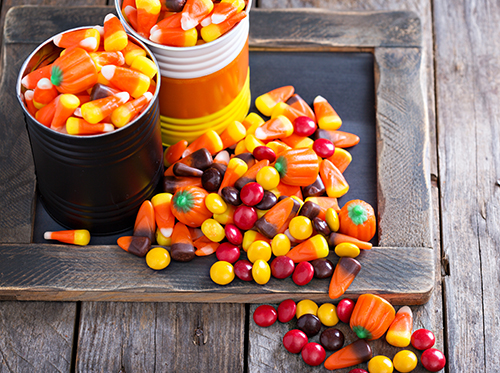
Halloween is a time to enjoy delicious candies you might avoid the rest of the year. Youngsters who get to dress up and ask for sweet treats out trick-or-treating cherish this holiday.

If you have braces on, Dr. Cronin would like you still to have fun and celebrate Halloween this year!

It’s easy to get carried away on Halloween by eating too much candy at once. Most parents try to prevent the all-too-common sugar high their kids experience on Halloween night. While there are certain candies that should be avoided, not all candy will cause problems for kids with braces. After trick-or-treating, you could trade unsafe candies with siblings and/or friends so they don’t miss out on the sugar buzz.

Dr. Cronin and our team have come up with a list of teeth-friendly treats that should keep you from worrying about breaking your braces. We also came up with a list of candies to avoid, so as to save you a trip to our Langley office. Remember to be extra careful when you indulge this Halloween!

Braces-Friendly Sweets

  • Solid chocolate: Milk, white, or dark
  • Nougat-filled candy bars: Three Musketeers
  • Powdery candy: Sweet Tarts, Pixie Stix
  • Mint-flavored candy
  • Malted milk balls
  • Soft cookies
  • Peanut butter crackers

Avoid These Treats

  • Sticky candy: Starbursts, toffee, Tootsie Rolls
  • Hard candy: Suckers, Jolly Ranchers
  • Taffy
  • Caramels
  • Fruit chews
  • Gum
  • Caramel apples
  • Skittles
  • M&Ms

When in doubt, ask Dr. Cronin if a particular candy is safe to eat when you have braces. We hope you enjoy your Halloween sweets, and look forward to seeing you at your next appointment! Happy Halloween!