
Our Blog

What Did You Do on Your Summer Vacation?

June 5th, 2024

The best part of summer vacation is time. Time to hang with friends, time to travel, time to get a summer job, time to catch your breath after a busy school year. And if Dr. Cronin and our team have recommended braces, summer is also a great time to start orthodontic treatment!

  • Time for Office Visits

It can be easier to get an appointment in the summer because many patients and their families are on vacation. And, because your earliest visits are generally the longest, you won’t have to disrupt your school schedule as much or work around after-school activities.

  • Time to Get Used to Your Appliance

There can be some discomfort in the first few days after you get your braces, so you might find it’s more convenient and comfortable to be at home. You’ll have time to get used to choosing and eating braces-friendly foods, to practice speaking clearly with new braces or aligners, to appreciate your new look. And your friends will have time to get used to your braces, too!

  • Time to Establish New Dental Routines

Over the years, you’ve gotten used to brushing at least twice a day for two minutes and flossing at least one a day. Now it’s time to add some new moves. Brackets and wires can trap food particles and lead to a greater risk of cavities, so you’ll need some new tools to keep your braces their cleanest.

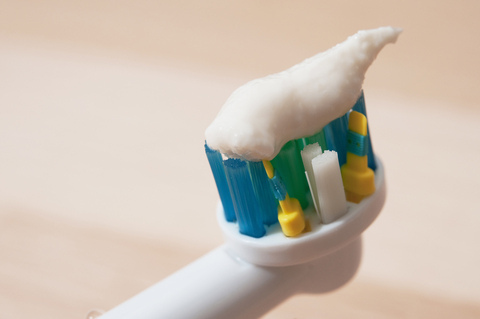
There are toothbrushes that have heads designed especially for cleaning around brackets. Floss threaders get floss in between wire and brackets, or use a floss specifically designed for braces. Little cone-shaped brushes called interproximal brushes fit around your braces and under your wires to remove hard-to-reach food particles and plaque.

Getting your cleaning routine down during the summer will help you take care of any clinging food particles quickly during your lunch hour or before after-school activities. And, you’ll know exactly what dental supplies you’ll need in your locker.

  • Time to Make Adjustments to Your Extra-Curricular Activities

Braces or aligners will provide you with a future filled with beautiful smiles, but they might require some present-day adjustments in your normal activities.

If you play a sport, especially where contact is possible, a custom mouthguard is the best way to protect your teeth, your jaw, and your braces in case of collision or a fall. Let us know what sports you play as soon as you get your braces.

If you play a reed or wind instrument, you might have to adjust the way you use your lips and teeth to produce your sound. Learning to use dental wax to cover brackets and protect your lips and mouth is well worth it. If you take lessons, talk to your instructor about the best way to adapt to your braces if you think your tone has been affected.

If you are in speech or drama, it could take a while to be comfortable with your articulation. Talk to us if you find you are having problems with your regular pronunciation for some great suggestions on getting back to normal as quickly as possible.

Summer certainly offers some advantages in giving you the time you need to get comfortable with your braces or aligners. But, there’s really no bad time to begin your orthodontic treatment. Spring, summer, fall, or winter, we’re here to help make sure your treatment experience at our Langley office is a positive one. After all, working toward a lifetime of beautiful smiles is always in season.
Water Flossers and Braces

May 29th, 2024

You devote a lot of energy to your orthodontic treatment. Appointments, rubber bands, adjustments, cleaning (so much cleaning)—and why? Because you know that your attractive, healthy smile will be well worth the effort.

But if you find that keeping your teeth and braces clean requires more time and energy than it should, and you’re still not getting the results you’d like, a water flosser might be just the tool you need to help make your cleaning routine easier and more effective.

Plaque and tartar can be a real problem when you wear braces. Cleaning around braces and wires can be a challenge, and it can be difficult to get floss between your teeth and close to your gums, even with special threaders or floss designed to slip behind your wires.

But ignoring bacteria and plaque build-up can lead to cavities, weakened or discolored enamel, and gum problems. Fortunately, a water flosser can help wash away food particles, bacteria, and plaque even in tight, hard-to-reach spaces, while providing gentle cleaning along sensitive gums.

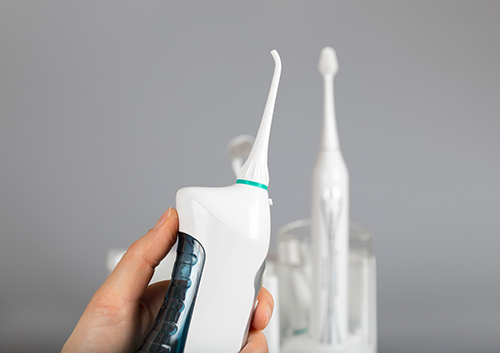
Water flossers use a pulsing stream of water to remove food particles and plaque between and around teeth. You can adjust the water pressure to apply just the right amount of cleaning power, and then direct the flow to your gum line, between your teeth, around your brackets, or anywhere else you need. Some models even offer tapered heads with brushes designed specifically for cleaning braces.

You might consider investing in a water flosser if you have:

  • Mobility issues. If you have joint or mobility issues, a water flosser will let you clean those hard-to-reach areas more easily.
  • Lingual braces. Because lingual braces are on the inside of the teeth, they can be more difficult to clean effectively with regular brushing and flossing.
  • Problems removing plaque. If you find that you are brushing and flossing regularly, but still have plaque build-up around your braces, give water flossing a try.

A beautiful smile is well worth all the time and effort you are devoting to it. If you think a water flosser might save you a bit of that time and effort, and provide better cleaning power, talk to Dr. Cronin  about your options during your next visit to our Langley office. We’ll let you know if traditional flossing, a water flosser, or a combination of the two will give you your cleanest, healthiest smile.

Fluoride and Your Orthodontic Treatment

May 29th, 2024

Our team at Cronin Orthodontics knows that there are many ways you can protect your pearly whites throughout your orthodontic treatment. If you follow the rules and brush your teeth twice a day, floss often, and protect your appliances from damage, you should have a successful treatment.

But did you know there’s another way to keep your teeth sparkling and healthy during your time wearing braces?

Fluoride, the mineral that helps you prevent cavities and tooth decay, can also help keep your teeth strong. Fluoride comes in two varieties: topical and systemic. Depending on your oral health or the recommendation of Dr. Cronin, you may be required to have a fluoride treatment every three, six, or 12 months. We may also prescribe a fluoride product such as a mouthwash, gel, or antibacterial rinse for at-home treatment to keep your teeth happy in between visits.

If you have any other questions about fluoride or your treatment, please don’t hesitate to give us a call!

Why Do I Need a Retainer?

May 28th, 2024

Congratulations! You’ve done the hard work necessary to create your beautiful smile! You’ve carefully completed all the steps needed to reach the end of your orthodontic journey. Well, nearly all the steps. We can’t forget that last step which will ensure that all your hard work is rewarded.

When you first began orthodontic treatment, Dr. Cronin decided on the best plan for straightening your teeth and perfecting your bite, whether you wore traditional braces, lingual braces, aligners, or other orthodontic appliances. And now that you’re finishing treatment, there’s one more option to consider—your retainer.

Why do I need a retainer?

While you’ve spent time in treatment, more has changed than just the position of your teeth. The periodontal ligament, the connective tissue that connects the teeth to the jawbone, is stretched as the teeth shift. The bone in your jaw changes, too, reforming and rebuilding around the roots of your teeth as they move to their ideal locations.

These changes happen because your braces or aligners apply gentle, constant pressure to move your teeth. When you’ve finished wearing these appliances, the pressure stops. Ligaments will try to return to their original shape, which can shift teeth back toward their old positions. And the rebuilding bone isn’t dense enough yet to stop teeth from shifting due to the normal, everyday pressures of eating, chewing, and smiling.

A retainer prevents your teeth from moving back, or “relapsing,” by giving your bones and ligaments time to stabilize and rebuild. The process takes months, so keeping your teeth in place as bones rebuild and grow denser is crucial. This is especially important for patients with more serious misalignments. Dr. Cronin will let you know which kind of retainer will be best for you and just how long you’ll need to wear your retainer.

Are there different kinds of retainers?

There are! Retainers can be removable or fixed, visible or nearly invisible, metal, plastic, or metal and plastic. Three of the most popular retainer options include:

  • Hawley Retainers—the traditional removable retainer, which uses a molded acrylic plate with wires attached to keep your teeth properly aligned and to hold your retainer in place.
  • Clear Plastic Retainers—a removable retainer made of custom vacuum-formed plastic, which fits over the teeth like a clear aligner.
  • Fixed Retainers—a small single wire bonded to the back of specific teeth, which holds them in place and prevents any movement.

Dr. Cronin will let you know whether a removable or fixed retainer is best for making sure your teeth don’t start to relapse, and fill you in on the benefits and care of each type of retainer.

How long do I need to wear a retainer?

There’s no standard answer to this question. Just like your retainer is custom-built to fit your individual teeth, the amount of time you’ll spend in that retainer depends on your individual needs. Retainers might be worn fulltime for months or years, be worn only at night after several months of daily wear, or be worn long-term to make sure your orthodontic work lasts.

Because you’ve done the hard work already, and your beautiful, healthy smile is the result. Talk to a member of our Langley team about which retainer option will be best for making sure that this smile lasts a lifetime.