
Our Blog

Eating with Braces: Braces-friendly snack recipe

May 16th, 2018

At Grant Orthodontics, Dr. Grant and our staff know that eating with braces can be tricky. You want to avoid damaging the bands, brackets, and wires, since any damage can delay the progress of your treatment. After adjustments, your mouth may also feel sore, which will make eating more of a chore than a pleasure.

The good news is you do not have to avoid all of your favorite foods; there are ways you can still enjoy them. Try some of these ideas and recipes for great snacks that are friendly to your braces.

Fruits and Vegetables

You still need to eat fruits and vegetable for the healthy nutrients. The trick is to cut harder items into small pieces that you can chew easily with your back teeth. Canned fruits are also a great choice, but select fruits packed in water to avoid the heavy, sugary syrups. It’s a good idea to avoid excess sugar with braces, since sugar build-up around your braces can lead to plaque formation.

Single-serving packages are available to make your snack portable and convenient. Enjoy vegetables with a small amount of a healthy dip. Hummus or yogurt can be used for flavor without adding unnecessary fat or calories.

Banana and Honey Smoothie

Smoothies are a healthy treat, and you can create these drinks with your favorite ingredients. You can use a variety of yogurt types for your smoothie: regular, low or non-fat, and Greek are all great choices.  Here’s one of our favorite smoothie recipes:

  • 6 ounces of your choice of yogurt
  • 1 or 2 teaspoons of honey
  • 1 ripe banana
  • 6 ounces milk

Chop the banana into smaller pieces and put all your ingredients into a blender. Blend on low until everything is mixed and then blend on high for about 20 seconds to make your smoothie fluffy.

The great thing about this recipe is that you can substitute just about any small or cut-up fruit for the banana. Try blackberries, raspberries, or peaches for variety. Try to avoid fruits with small seeds; strawberries can leave bits stuck in your braces. You can even make a smoothie with peanut butter and jelly!

Please ask our team if you have any concerns regarding the foods you can safely eat while wearing braces.

Pick the right electric toothbrush!

May 16th, 2018

The electronic toothbrush has undergone several technological advances since the 1960s. Everything from design and bristle motions to rotation, oscillation, and sonic vibration has led to dramatic changes in this necessary tool over time.

Rotation oscillation happens when the head of the toothbrush rotates from one direction to the other. The benefit of powered toothbrushes is that they can produce 50,000 strokes per minute, compared to 300 strokes with a manual toothbrush.

When you’re thinking about brush head size, smaller brush heads are best for hard-to-reach areas and small mouths. Brush heads should be replaced every three to six months as needed. A good way to save money is to designate a brush head for each family member which can be taken on and off a shared base motor.

Having a base motor or rechargeable toothbrush can deliver enough power on a full charge for a week of brushing, which makes it convenient for travel or when life gets busy. Some toothbrushes include audible signals that let you know when to switch the area of your mouth you’re brushing or when a full two minutes has gone by.

Do you have sensitive teeth? Studies have indicated that people tend to apply more pressure on their teeth when they use a manual toothbrush. This makes an electric toothbrush a preferable option if you’re having issues with sensitive teeth or gums.

There are even electric models with pressure sensors that will stop the brush from spinning when you press too hard against your teeth!

Everyone can benefit from having an electric toothbrush. A large handle size can be taken into consideration if a member of the household is young, or has a physical disability or arthritis. They’re even recommended for children in order to maintain good oral hygiene from a young age.

Biofilm is a term used for plaque or debris that builds up in your mouth. If not properly addressed, this can cause serious bacterial infections to your gums and teeth. If you want to remove biofilm in the most efficient way, an automatic toothbrush is the way to go.

When you're ready to make your decision, make sure to consult with Dr. Cronin at our Langley office to decide which electric toothbrush is right for you!

What role do elastics (rubber bands) play in orthodontics?

May 9th, 2018

Wearing orthodontic braces may be the best choice for correcting your teeth and improving your smile, and that's why you've come to see Dr. Grant at Grant Orthodontics. Braces, which consist of brackets and wires, work by gently applying pressure to the teeth, and that pressure causes them to move into the correct position. In some cases elastics, or rubber bands, are used to apply additional pressure needed to move your teeth.

The Purpose of Elastics

Customized for each patient, the rubber bands typically stretch over tiny loops on the top and bottom brackets. If worn consistently, and every day, these tiny elastics will apply the steady pressure needed to guide your teeth into the correct position.

These elastics are crafted from medical-grade latex, which is safe to be in contact with your mouth. It's common to remove the elastics during meals if opening your mouth wide enough to eat is difficult. Our staff will demonstrate how to affix the elastics so it will soon become second nature to replace them.

The Do’s and the Don'ts

DO - Get in the habit of carrying around extra rubber bands and replace them as soon as one breaks. By consistently wearing the elastics, you may shorten the overall time needed to wear braces.

DON'T - Double up on elastics as this will cause too much pressure on the tooth or teeth and can actually harm the root of the tooth.

DO - Always wash your hands before removing or replacing the rubber bands.

DON'T - Overstretch the rubber band or it will lose its strength and it will be ineffective.

DO - Call us if you run out of rubber bands.

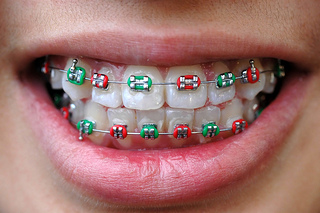
DO - Have fun with your braces and elastics. There are many different colors available that can let you show off your soon-to-be perfect smile.

Rubber bands are a key part of your orthodontic treatment, and learning how to remove and replace them is an important part to maintaining your braces. Before we set you on your journey to a perfect smile, we'll make sure you understand all there is to know about how to take care of your braces. Of course, if you have any questions about your orthodontic treatment, or orthodontics in general, be sure to contact our Douglasville or Union City office, and our staff will be happy to assist you!

Misconceptions About Orthodontics

May 9th, 2018

While everyone understands that a dentist takes care of teeth, not everyone is aware of what an orthodontist does. This confusion sometimes leads to misunderstandings about what Cronin Orthodontics does for our patients and how exactly Dr. Cronin can help them. Let’s take a closer look at a couple of the myths and misconceptions about orthodontists.

Perhaps the biggest misconception about the orthodontist is that they’re just like your family dentist. The truth is, they’re actually very different. While it’s true that both orthodontists and dentists care about helping you enjoy a lifetime of good dental and oral health, orthodontists go about achieving this goal in different ways. For instance, if you need to have a cavity filled, you probably won’t make an appointment to see an orthodontist. Dentists are the health professionals to see if you’re concerned about a cavity or need a filling. A dentist can also treat gum disease, tooth decay, toothaches, and other common oral health problems.

People see an orthodontist for very particular services. Most of the patients we see on a daily basis are here because they have braces, or they need to be fitted with braces or another form of tooth-straightening device. In other words, they consult an orthodontist when they are concerned about the alignment of their teeth. As a child grows up, his or her teeth may come in crooked. This can happen for a number of reasons, so it’s important for an orthodontist to take a look at a child’s teeth at about seven years of age. At that age, it’s possible to detect any problems that have not become too advanced to treat easily. Your family dentist may also refer your child to an orthodontist once the adult teeth have fully grown in.

Another common misconception about orthodontists is that they only treat children. It’s true that when you visit an orthodontic clinic you’re apt to see a lot of young kids, but you’ll also see teenagers, college students, and adults. Because crooked teeth can be caused by a number of different factors, it’s entirely possible for someone to require orthodontic treatment at any age.

If you want to know more about the practice of orthodontics or what your orthodontist can do for you, then simply ask Dr. Cronin. It’s best to get answers to your specific questions directly from the person who will be treating you. While you’re sure to find Internet resources helpful, there really is no substitute for the personal attention you’ll get during your appointment at our Langley office.